Muscle Stimulation in Physical Medicine, Aesthetics & Pelvic Floor Health

Electrode based aesthetic muscle conditioning and HEIT™ for rehabilitation and pelvic floor care

Regina West; October 23, 2026

A to Z News article graphic on electrode-based aesthetic muscle conditioning and HEIT™ for physical medicine and pelvic floor care.

A patient seeking firmer abdominal muscles, someone working to restore muscle function, and a person hesitant to discuss urine leakage each bring a different goal to the treatment room. Across physical medicine, aesthetics, and pelvic floor health, clinician-directed muscle stimulation gives practices ways to address those goals through systems designed for specific applications.

The value of a system becomes clearer when you look at the treatment experience: how stimulation reaches the intended muscles, how the practitioner sets up a session, and how comfortably the treatment fits the patient’s needs. Guided protocols, adjustable controls, and purpose-built applicators all have a role.

For Zimmer MedizinSystems, these applications are represented by Z Stim for aesthetic muscle conditioning, emFieldPro for physical medicine and rehabilitation, and PF TonerPro for pelvic floor treatment. Understanding their technologies helps practices identify the system that fits the services they want to offer.

How Muscle Stimulation Works

Muscles normally contract in response to signals from motor nerves. Muscle stimulation devices provide an external stimulus that can activate those nerves and produce contractions. The non-invasive systems discussed here deliver that stimulus through skin electrodes or a changing magnetic field that induces currents in tissue.

Electrical muscle stimulation (EMS), also described as neuromuscular electrical stimulation (NMES), delivers current through skin electrodes. High Energy Inductive Therapy (HEIT™) uses a powerful, changing external magnetic field to induce currents in tissue. These systems pair application-specific program menus with dedicated applicators and positioning options suited to their respective treatment goals.

Technology Differences at a Glance

Technology Delivery method Treatment focus
Electrode based muscle stimulation Electrical current through skin electrodes, with parameters intended to elicit contractions Muscle conditioning or rehabilitation, depending on the device
HEIT™ for rehabilitation An external applicator generates a magnetic field that induces electrical currents in tissue Muscle stimulation for physical medicine and rehabilitation
HEIT™ for pelvic floor care An external applicator delivers magnetic field energy to stimulate pelvic floor musculature Pelvic floor muscle rehabilitation and neuromuscular control for urinary incontinence

Z Stim for Aesthetic Muscle Conditioning

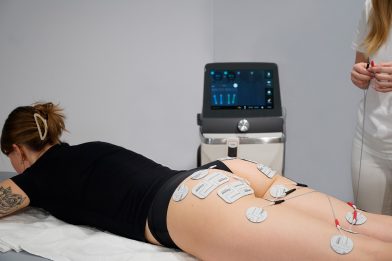
Patient receiving Z Stim electrode-based muscle stimulation on the buttocks and thighs, with the treatment system and practitioner visible.
Z Stim electrode placement for aesthetic muscle conditioning of the buttocks and thighs.

For aesthetic practices, Z Stim brings muscle strengthening, toning, and firming into the treatment menu. Its electrode-based stimulation addresses the abdomen, buttocks, thighs, and arms, giving practitioners a dedicated option for patients seeking aesthetic muscle conditioning.

The system provides up to eight independent stimulation channels, allowing selected treatment areas to be addressed simultaneously or one area to be treated on its own. Its interface guides the practitioner through body area selection and illustrates electrode placement. Preset protocols and individual channel adjustment provide a structured starting point with room to tailor treatment.

For a busy practice, simultaneous treatment of multiple areas is a practical advantage. Guided body area selection and color-coded channels help organize setup, while individualized settings allow practitioners to tailor a session to the patient’s muscle conditioning goals.

After selecting the protocol and starting settings, the practitioner may allow the patient to use the included remote controller to adjust intensity or pause the session.

emFieldPro for Physical Medicine and Rehabilitation

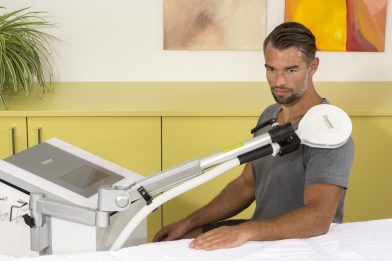
Seated patient receiving emFieldPro treatment over clothing at the shoulder, with the device and arm-mounted applicator visible.
emFieldPro positioned for static HEIT™ treatment at the shoulder as part of a rehabilitation plan.

In physical medicine, the focus may be restoring or maintaining muscle function. emFieldPro by Zimmer MedizinSystems uses HEIT™ to deliver electromagnetic muscle stimulation without adhesive skin electrodes or direct skin contact. The changing magnetic field induces currents in tissue that can activate nerves and produce muscle contractions.

A rehabilitation plan may call for muscle re-education, relaxation of muscle spasms, or maintaining or increasing range of motion. emFieldPro supports these applications, along with increasing local blood circulation and preventing or retarding disuse atrophy, the loss of muscle size associated with reduced use.

These rehabilitation goals are also relevant in chiropractic, physical therapy, and rehabilitation practices, where practitioners address athletes’ muscle function and mobility needs.

Magnetic delivery allows treatment through clothing, without the electrode placement and skin preparation required for electrode-based stimulation. Contact-free delivery can also avoid applicator pressure and manual manipulation of the treatment area. This can be a practical advantage when direct contact with a sensitive area would be uncomfortable. Static or dynamic application, preset programs, saved favorites, and adjustable controls give the practitioner ways to organize treatment around the rehabilitation objective.

PF TonerPro: Pelvic Floor Muscle Stimulation for Urinary Incontinence

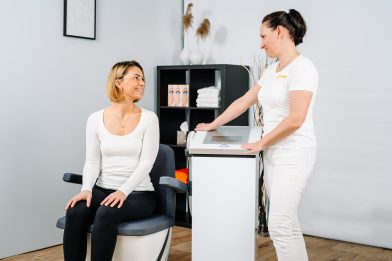
Fully clothed woman seated on the optional PF TonerPro treatment chair, with a practitioner beside the system.
PF TonerPro seated pelvic floor treatment while the patient remains fully clothed. Pictured with optional chair.

A treatment can be appropriate for a patient and still feel difficult to discuss. With urinary incontinence, concerns about privacy, undressing, or an internal applicator may be part of that conversation. The treatment format matters.

PF TonerPro uses HEIT™ to stimulate pelvic floor musculature for rehabilitation of weak pelvic muscles and restoration of neuromuscular control in the treatment of male and female urinary incontinence. The system delivers energy through clothing while the patient remains fully dressed.

The patient can receive pelvic floor stimulation without an internal probe or surgical incision. That non-invasive format gives practices a valuable option to discuss with patients who are hesitant about more intimate treatment methods. Treatment settings can be adjusted to establish a comfortable series of muscle contractions.

PF TonerPro offers preset pelvic floor programs, customizable settings, and saved favorites. Its dedicated external applicator supports static and dynamic treatment, with or without the optional chair, allowing practitioners to approach the treatment area from different directions. The optional chair and cushion provide additional positioning options and support patient comfort during seated treatment. Treatment requires no consumables.

PF TonerPro also gives aesthetic practices a way to include pelvic floor care in a broader conversation about intimate health and wellness. A private consultation offers patients an opportunity to discuss urinary symptoms and related concerns with their practitioner.

Guided Protocols and Treatment Consistency

Stimulation settings should follow a defined treatment objective. Frequency, intensity, timing, and electrode or applicator placement affect how a session is delivered. On-screen protocols can help practitioners establish a repeatable framework, while adjustable controls allow them to respond to the patient.

The guidance differs by system. Z Stim illustrates electrode placement for selected body areas. emFieldPro provides program selection and saved settings for its rehabilitation workflow. PF TonerPro provides programs for pelvic floor treatment. These features can support consistent setup across multiple practitioners and repeat treatment sessions, while patient assessment and adjustable parameters keep treatment individualized and adaptable as the patient’s needs and tolerance change.

Z Stim can save session settings as a favorite under a patient’s name, including the date, time, protocol level, and selected treatment area. emFieldPro stores named custom programs as favorites, and PF TonerPro stores customized pelvic floor protocols. These features help practitioners retrieve a treatment setup for subsequent sessions.

Guided setup and defined protocols can also support team delivery by appropriately trained medical personnel. Once electrodes or a static applicator are positioned and settings established, the system delivers the selected stimulation sequence. This can reduce the need for continuous hands-on application. With emFieldPro and PF TonerPro, practitioners can choose between static and dynamic application according to the treatment plan. During dynamic application, the practitioner moves the applicator over the treatment area.

Practices can weigh these workflow features, treatment demand, and any consumable costs when evaluating a system’s financial fit.

Treatment Design That Supports the Patient and Practitioner

For electrode-based stimulation, the electrode is part of the treatment experience. Reliable adhesion, appropriate contact, and even current distribution help support consistent delivery. Zimmer MedizinSystems’ longstanding experience in electrotherapy includes single-use Zimmertrodes for rehabilitation, with a patented glycerol coating to support comfort and a self-adhering design that simplifies application.

Z Stim uses dedicated electrodes for its aesthetic muscle stimulation treatments. These electrodes work with the system’s placement guidance and adjustable channel settings as part of the complete treatment setup. For compatible single-use electrodes, disposal after use also avoids the cleaning and storage required for reusable patient-dedicated electrodes and supports a hygienic treatment workflow.

Comfort is part of treatment setup across these systems. Practitioners can adjust stimulation intensity using patient feedback to establish a comfortable series of muscle contractions. Z Stim‘s patient remote provides another way for patients to communicate their preferred intensity through direct adjustment.

HEIT™ takes a different approach to delivery. emFieldPro and PF TonerPro use external applicators to deliver magnetic field energy without adhesive skin electrodes. For PF TonerPro, fully clothed pelvic floor treatment adds a particularly meaningful element of privacy. For emFieldPro, powerful, contact-free stimulation and preset programs offer an efficient way to incorporate muscle stimulation into rehabilitation sessions.

These differences help practices evaluate how a system will fit into everyday care, from room setup and repeatable protocols to the patient’s experience during treatment.

Frequently Asked Questions

Is TENS the same as electrical muscle stimulation?

TENS and EMS can both use skin electrodes, but their usual treatment objectives differ. TENS is generally used for pain relief. EMS and NMES use parameters intended to produce muscle contractions for conditioning or rehabilitation, depending on the device. Some systems provide both modes.

How does electrode based muscle stimulation differ from electromagnetic stimulation?

Electrode-based muscle stimulation delivers current through electrodes placed on the skin. Electromagnetic stimulation induces currents in tissue through an external magnetic field. Both can elicit muscle contractions, but applicator design, protocols, settings, and intended use vary between devices.

How do preset protocols support treatment consistency?

Preset protocols provide a structured starting point for treatment selection and setup. Body area guidance, saved favorites, and adjustable settings can help practitioners repeat an organized approach while tailoring treatment to the patient.

Does PF TonerPro treatment for urinary incontinence require an internal probe or undressing?

No. PF TonerPro uses HEIT™ through an external applicator while both female and male patients remain fully clothed. Its non-invasive format requires no internal stimulation probe.

How do PF TonerPro and emFieldPro differ?

Each system applies HEIT™ within a treatment-specific setup. PF TonerPro combines a dedicated pelvic floor applicator with preset programs, customizable settings, and saved favorites for urinary incontinence care. It supports static and dynamic application, with positioning options that include an optional chair or cushion. emFieldPro provides large and medium applicators with rehabilitation programs for physical medicine. Their applicator configurations, treatment protocols, and intended applications guide their respective clinical workflows.

Which system is appropriate for my practice?

Start with the treatment goal. Z Stim addresses aesthetic muscle conditioning through electrodes. emFieldPro serves physical medicine and rehabilitation. PF TonerPro provides dedicated pelvic floor stimulation for urinary incontinence. The appropriate system depends on the intended use and the patients the practice treats.

Find the Fit for Your Practice

Which patient goals do you want to address, and what would make treatment easier to deliver in your practice? Explore the system designed for your application, or contact Zimmer MedizinSystems to discuss treatment features, setup, and clinical education.