High Energy Inductive Therapy (HEIT) in Chiropractic: Featured in Chiropractic Economics
By Regina West; April 22, 2026
Scroll down to read the article in Chiropractic Economics
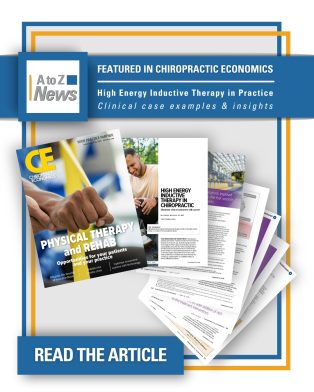
A feature article published in the April 14, 2026 issue of Chiropractic Economics highlights the growing role of high energy inductive therapy (HEIT therapy) in modern musculoskeletal care. Written by Yorick Wijting, PT, DPT, the six-page scientific commentary explores how this form of deep electromagnetic stimulation therapy is being integrated into chiropractic and rehabilitation settings to improve patient outcomes—particularly in cases that may not respond to conventional approaches.
Titled “High Energy Inductive Therapy in Chiropractic: Maximize Clinical Outcomes with Power,” the piece presents HEIT therapy as a non-invasive electromagnetic therapy modality designed to reach deeper musculoskeletal structures without direct skin contact. This approach allows practitioners to stimulate targeted tissues efficiently while maintaining patient comfort, positioning the modality as an emerging tool in chiropractic treatment protocols.
Readers can view the article within the April 2026 issue of Chiropractic Economics or view/download a full copy below.
Understanding High Energy Inductive Therapy (HEIT)
As outlined in the feature, electromagnetic stimulation has long been used in rehabilitative medicine to help support circulation, reduce inflammatory signs such as pain and swelling, and stimulate biological repair processes at the cellular level.
HEIT therapy builds on this foundation by delivering high-intensity electromagnetic fields—significantly stronger than traditional pulsed electromagnetic field (PEMF) applications—allowing for deeper tissue penetration and the ability to generate current flows capable of stimulating both sensory and motor nerves.
As Wijting explains, “The greater field strength increases the depth of penetration and can elicit current flows strong enough to evoke muscle contractions, even in deeply located muscles that are typically inaccessible to surface stimulation.”
This level of output enables:
- Activation of deep musculature not easily reached with surface stimulation
- Support for circulation and tissue repair mechanisms
- Non-contact delivery, eliminating the need for electrodes or direct skin application
In clinical practice, this category of electromagnetic therapy device for chiropractic and rehabilitation is represented by the emFieldPro system by Zimmer MedizinSystems, which is designed to deliver high energy inductive therapy consistent with the parameters described in the article.
Clinical Application: Real-World Case Examples
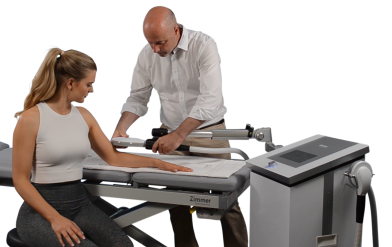
Example of high energy inductive therapy (HEIT) application using the emFieldPro system. Image shown for illustrative purposes; not from the cases described in this article.
To illustrate how this approach is applied in practice, Wijting presents two clinical cases from his outpatient setting, focused on chronic musculoskeletal conditions.
Chronic Low Back Pain and Instability
In one case, a 65-year-old patient with long-standing low back pain and lumbar instability underwent a treatment program combining exercise therapy, manual interventions, and HEIT therapy.
According to the editorial:
- HEIT was used to help recruit inhibited spinal stabilizing musculature
- Visible muscle contractions were achieved during treatment sessions
- Symptoms improved progressively over several weeks
The outcome:
- The patient was pain-free by week six
- Muscle atrophy had resolved
- Functional activity, including walking training, was fully restored
“HEIT provided meaningful impact as symptoms improved and muscle recruitment visibly increased.”
This case highlights how deep electromagnetic stimulation therapy can support neuromuscular activation in cases where traditional approaches alone may be insufficient.
Chronic Foot and Ankle Pain
A second case involved a patient with chronic foot and ankle pain involving the plantar fascia—commonly associated with plantar fasciitis—and the posterior tibialis.
After six sessions of shockwave treatment alone showed no measurable improvement, HEIT therapy was introduced to support:
- Circulatory enhancement
- Reduction of inflammatory signs
- Stimulation of muscle contractions to promote mechanical tissue activation
Following the addition of HEIT:
- Symptom reduction began after integration into the care plan
- The patient experienced greater than 75% reduction in symptoms after 14 sessions
This progression underscores the role of this form of therapy for chronic musculoskeletal pain, particularly when addressing regions with limited perfusion or long-standing inflammation.
Expanding the Role of Electromagnetic Therapy in Chiropractic
Throughout the article, Wijting emphasizes that HEIT therapy should be used with a clearly defined clinical objective and integrated into a broader treatment strategy.
His conclusion reflects a growing trend in the field:
High energy inductive therapy has the potential to amplify therapeutic outcomes by reaching deeper tissues and supporting physiological processes that may not be fully addressed by traditional modalities.
For practitioners evaluating electromagnetic therapy machines for clinics, this represents a shift toward technologies capable of providing both depth and efficiency in treatment delivery.
For patients, it introduces a non-invasive deep muscle stimulation approach that may be incorporated into care plans for conditions involving pain, dysfunction, or reduced mobility.
About the Chiropractic EconomicsArticle Author
Yorick Wijting, PT, DPT, is a physical therapist with more than 30 years of international clinical, leadership, and education experience. He operates a private practice focused on musculoskeletal rehabilitation and advanced therapeutic modalities, including high energy inductive therapy using the emFieldPro system from Zimmer MedizinSystems.
Read the Full Article
You can read the full six-page feature below, or view the article online at Chiropractic Economics.
Use the controls below to scroll the article.
You may also read the article on page 50 of the April 2026 issue of Chiropractic Economics
high-energy-inductive-therapy-chiropractic-economics-april-2026