
Shockwave Therapy for Chronic Tendon Injuries: Dr. McAlister Featured in The American Chiropractor
By Regina West; Mar 13, 2026
Scroll down to read the article in The American Chiropractor
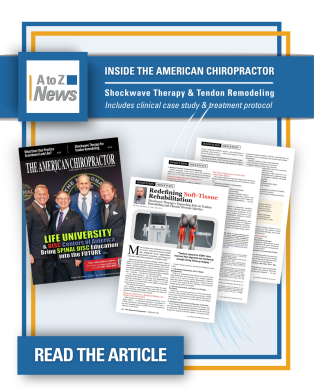
A feature article in the February 2026 issue of The American Chiropractor examines how clinicians are turning to shockwave therapy for difficult-to-treat soft-tissue injuries. Authored by Dr. Davis McAlister, DC, MEd, MS, CSCS, the article explores how radial extracorporeal shockwave therapy (rESWT) is helping clinicians address tendon degeneration and chronic overuse conditions through biologically focused rehabilitation strategies.
Titled “Redefining Soft-Tissue Rehabilitation: Shockwave Therapy’s Expanding Role in Tendon Remodeling and Chronic Overuse Injuries,” the feature reviews emerging research on the biological mechanisms behind shockwave therapy and its increasing integration into modern musculoskeletal care.
Readers can view the article within the February 2026 issue of The American Chiropractor or view/download a copy of the full article below.
Moving Beyond Symptom Relief
For many years, treatment of chronic soft-tissue injuries often centered on reducing pain and inflammation. Increasingly, however, clinicians are focusing on therapies that address the underlying biology of tissue degeneration and recovery.
“Musculoskeletal medicine continues to evolve toward treatment models that emphasize tissue regeneration, functional restoration, and long-term outcomes rather than temporary symptom relief,” Dr. McAlister writes, while describing the broader shift toward biologically focused therapies.
Within that framework, shockwave therapy is increasingly used to stimulate biological repair mechanisms that address the underlying causes of chronic soft-tissue pathology.
Biological Effects Driving Tendon Remodeling
A growing body of research suggests that shockwave therapy may influence multiple biological processes involved in tendon repair and remodeling. Dr. McAlister reviews evidence showing that radial extracorporeal shockwave therapy can stimulate fibroblast activity, promote collagen organization, and support improved vascularization in chronically compromised tissues.
These biological responses may help explain the structural improvements observed in treated tendons.
“Tendons exposed to rESWT show improved fiber alignment and mechanical strength during follow-up imaging,” Dr. McAlister notes, pointing to physiological changes documented in current research.
The feature also highlights mechanotransduction signaling—where mechanical stimulation triggers cellular responses—as another mechanism through which shockwave therapy may contribute to tissue remodeling and functional recovery in clinical rehabilitation settings.
As clinical interest in these mechanisms continues to grow, radial shockwave therapy is increasingly being incorporated into conservative rehab protocols for long-standing tendon problems.
Case Study: Chronic Hamstring Tendinopathy
The article also presents a clinical case study involving a 42-year-old athlete with proximal hamstring tendinopathy, a condition frequently seen in runners and strength athletes.
Treatment incorporated radial shockwave therapy alongside progressive rehabilitation strategies, including eccentric loading and isometric strengthening. The patient experienced rapid and sustained improvement, reporting a 40% reduction in pain within two weeks and a 70% reduction by week five. By week six, the patient had returned to light running and ultimately resumed full training without pain at the 12-week follow-up, with functional gains reflected in a marked improvement in LEFS score. These outcomes illustrate how shockwave therapy may support meaningful functional recovery when incorporated into a structured rehabilitation program.
Dr. McAlister also emphasizes an important clinical distinction often overlooked in chronic tendon injuries. As he explains, “chronic tendinosis is degenerative, not inflammatory,” a concept that continues to influence evolving treatment strategies for overuse injuries.
Expanding Applications for Shockwave Therapy
As the evidence base grows, shockwave therapy is being explored for a wider range of chronic soft-tissue conditions, including:
- Hamstring and adductor tendinopathies
- Gluteal tendinopathy
- Chronic wrist and forearm tendon injuries
- Post-surgical scar tissue remodeling
- Select nerve entrapment syndromes
In clinical practice, technologies such as the enPulsPro radial pulse shockwave therapy system from Zimmer MedizinSystems are commonly used to deliver radial shockwave treatments in chiropractic, rehabilitation, and physical medicine settings.
Learn more about the radial shockwave therapy technology used in Dr. McAlister’s clinical protocols.
Advancing Conservative Musculoskeletal Care
Dr. McAlister concludes that integrating advanced, biology-driven treatments such as shockwave therapy with progressive rehab programs could enable clinicians to achieve longer-lasting results for patients struggling with chronic soft-tissue conditions.
Scroll below to read the full article from The American Chiropractor.
Use the controls below to scroll the article.
You may also read the article on page 44 of the Feb 2026 issue of The American Chiropractor
Redefining Soft-Tissue Rehabilitation - Dr. McAlister - The American Chiropractor - 2-2026